
Sunday, 27 March 2016

TOP 10 CUTEST PETS! (2015)

Before You Buy A Hedgehog Watch This!

Five benefits of owning a pet


Father and son walking dog in countryside


Thursday, 24 March 2016

Dogs Take Over Humans’ Beds


Have you ever come home, tired from a long day at work, longing to crawl into bed only to find your four-legged furry friend has beat you to it? Does your dog make space for you on the bed or does your pet claim the bed as his or her own?
The following ten images show dogs sleeping very comfortable on their humans’ beds. We doubt they’ll move over for their masters.


http://www.lifewithdogs.tv/2015/06/dogs-take-over-humans-beds/

150622-SleepDog1
150622-SleepDog2
150622-SleepDog3
150622-SleepDog4
150622-SleepDog5
150622-SleepDog6
150622-SleepDog7
150622-SleepDog8
150622-SleepDog9
150622-SleepDog10


Monday, 21 March 2016

4 Things You Can Do To Make Your Pet Happier And Healthier Better stock up on pumpkin and white rice.

Any loving pet owner would want to improve the life of his or her pet, but exactly how to do that can seem mystifying to most. For clear-cut strategies, we turn to the professionals.
Barbara Royal, a Chicago-based veterinarian, has worked with people’s four-legged companions for decades, and she’s full of advice for creating happier, healthier animals. Here are four things she says you can do that not only benefit your pets, but also benefit those who treat and care for them.

Randomly take your dog into the vet clinic.

The panting, the pacing, the cowering — many times, pets panic as soon as they arrive at the vet. So, Royal suggests making quick stops into the clinic and rewarding your pups with a treat each time to get them more comfortable ahead of their next appointment.
“Part of the problem as a veterinarian is that we’re always examining animals in a state of stress,” she points out. “It really makes a difference for heart rate, for getting appropriate blood values, things like that, if you can get an animal to relax.”

Treat minor stomach issues with pumpkin and white rice.

If your pet is experiencing stomach issues — like diarrhea — and your vet doesn’t believe it’s something serious, you can treat your pets at home by making them a simple meal.
“Dogs and cats both can do pretty well if you can give them pumpkin and then rice,” Royal says. “White rice — you overcook it, you add extra water to it, make it really goopy. It’s very absorptive; it really can help with diarrhea.” 

Play “rough” with your animal.

Every so often, set the cuddling aside and get down on the floor for some intense playtime with your dogs and cats, Royal suggests.
“It’s really important to get out that sort of instinctual urge of ‘wolf games’ or ‘wild cat,’” she says. “You can really play sort of rough — not really rough; you don’t want to encourage biting or things like that — but let them get wild a little bit.”

Prevent pets from biting.

Cats and dogs each give warning signs before they bite, and it’s a good idea to know what those signals are, particularly with felines.
“Cats sort of get a little bit quieter. Their eyes get really wide, the tail starts to wag, their ears get a little flatter,” Royal says. “Keep a big, thick towel around to cover the cat to keep them from biting.”

6 Tips for Raising Healthy and Happy Cats


Even half asleep, this black cat is incredibly beautiful.
By Michele C. Hollow of Pet News and Views
Cats are a lot like us. We cat parents know that while it is nice being around loving family and friends, we value our independence. Maybe we all have a little cat in us.
We also know that once we gain the trust of a cat, we’ll have a friend for life. A happy and healthy cat will reward us with affection. Showing them trust is easy. Following are six tips for raising healthy and happy cats.


1. Cat Naps

Cats sleep between 13 and 16 hours a day. They like having a warm and comfortable place to curl up in, even if that is on your bed, in an open linen closet (that’s where my mom’s cat sleeps) or in her own personal cat bed. One of my cats sleep on my desk while I work because she likes being near (at least that is what I tell myself) and she loves the big window that floods the room with sunlight. Getting 40-plus winks is quite restorative.

2. You are what you eat applies to cats too

Poor nutrition leads to health problems. Look for a cat food that lists meat as the first ingredient. Cats are carnivores and must have meat in their diets.
My cats are fed once in the morning when we have our breakfast, and once at night to coincide with our dinner time. After breakfast and dinner, I pick up and clean their bowls. They are left empty because a grazing cat that eats too much food can develop diabetes and other serious ailments.
The Association for Pet Obesity Prevention found that 58.3 percent of cats in the U.S. are overweight, and obesity leads to illness. My cats are not finicky. Some cats can be. So, try a few varieties of food until you find something your cat enjoys.

3. Good grooming

While cats groom themselves it is important to brush them. Make it a ritual. When my cats see me take out their brush, they come over and start to purr.
Brushing their fur cuts down on hairballs, which means they won’t ingest a lot of their fur when they are cleaning themselves, and you will have less fur in your home and on your clothes.

4. Cats like clean litter boxes

Ever notice that as soon as you clean the litter box, they want to use it? I can’t say that I blame them. No one likes a dirty bathroom!
Use a dust-free litter that’s free of harmful chemicals, additives and synthetic scents. There are lots of eco-friendly bio-degradable products on the market to choose from.

5. Playtime

Cats love to hunt and play. They know exactly where the laser pointer is kept and as soon as I reach for it, they are ready for the chase.  Just don’t shine it in their eyes.
Another favorite toy is a fishing rod with a fabric bird on one end. My cats love to chase and jump after this toy.
Playtime is when we bond, and cats get a lot of mental stimulation and exercise from playing.

6. Bonding time

Spending time with your cat benefits both of you. I make time in the morning before I start my work day. We wake up together and I talk to them while I give them their breakfast. After breakfast, we play with the laser pointer. I am at home, so we play after lunch and again after dinner.
They reward me with purrs and cuddles.
- See more at: http://petnewsandviews.com/#sthash.ouv3OUdK.dpuf

Wednesday, 16 March 2016

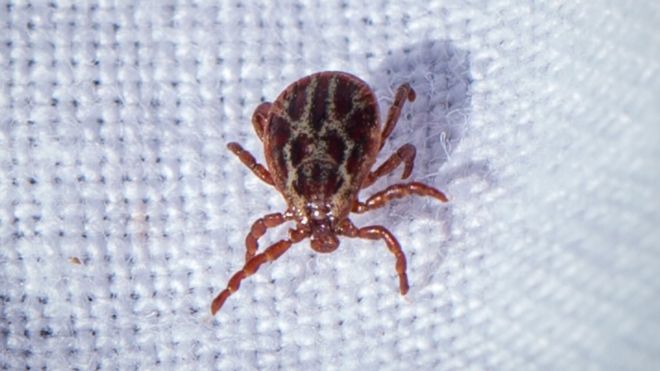
Dog owners warned about new tick disease

TickImage copyrightOther
Image captionTicks appear to be the vector for this parasitic disease

Dog owners in the UK are being warned about an outbreak of an animal disease that is carried by ticks.
It is the first time that experts have established an outbreak of babesiosis in the country.
In Essex, one dog has died and three others are still seriously ill after contracting the disease.
Experts say that it will be impossible to stop the spread of the disease, which is caused by a single-celled parasite. 
The ticks carrying the Babesia canis parasite have been found in fields in Harlow, Essex. The local council has put up a sign with a map defining the area and advising dog walkers not to enter. 
Two government agencies are now investigating the outbreak: the Animal and Plant Health Agency and Public Health England. 
Clive Swainsbury is a vet at the Forest Veterinary Centre in Harlow. He has been treating some of infected dogs, including the one that died.
"The parasite enters the bloodstream, enters the cells, and in the process of trying to kill the parasite the dog will actually destroy its own blood cells. So they become very anaemic."
The expectation is that it will spread throughout the country.

Easy to miss

"At present we have a very well defined area. The problem in the future is that every female tick will lay a couple of thousand eggs and all those offspring from that disease will also carry the disease. 
"As mammals move around they will start spreading the disease. Although you can advise dog walkers not to go there, it's possible that foxes and other animals will transport these ticks."
The symptoms of babesiosis within dogs include weakness, lethargy, pale gums, red urine and fever. A serious problem is that Babesia can be mistaken for other less dangerous diseases.

Border collieImage copyrightASHLEY COOPER/SCIENCE PHOTO LIBRARY
Image captionDogs spending lots of time outdoors are most at risk

"It's easy to miss it. And because it's a new disease to this country, we as a profession aren't used to looking for this disease on a regular basis."
The tick acts as a vector. In the same way that a mosquito transmits malaria by sucking the blood from a person, the tick does the same to an animal. It also sucks blood and in the process of feeding the disease will transmit from the tick to the dog. It's not contagious between dogs themselves.
The Pet Food Manufacturer's Association estimates that there are more than nine million dogs in the UK - almost a quarter of households. 
It's dogs that spend a lot of time outdoors, especially in rough and wooded areas, that are most at risk. 

Tip of the iceberg?

"The only solution is to kill the ticks quickly," says Mr Swainsbury. "Some of the tick products available will kill the tick quick enough to prevent the tick spreading the disease to the dog, because the tick needs to be feeding for 24 hours at least before it transmits the disease. 
"But not all tick products do that and you need to seek advice from your vet."
The tick found in the UK carrying the Babesia canis strain is called Dermacentor reticulatus
Prof Richard Wall is professor of zoology at the University of Bristol. He is helping to conduct the largest every veterinary study of ticks and tick-borne diseases, called the Big Tick Project. 
"People who work on ticks and tick-borne diseases are concerned about this outbreak. It could be the tip of the iceberg. If it spreads quickly throughout the UK then it is going to be a very significant problem, but we don't have enough info at this stage to make a prediction about how quickly this will happen.
"It's highly unlikely that the problem will now disappear, we have the vectors, we have the pathogens established in the UK." 
TV naturalist Chris Packham says: "The population of ticks is getting bigger year on, year on. That's because there is better over winter survival of the adults - it's warm and mild through our winters and that means they can breed more quickly in the spring and there are a lot more of them.
These animals are very good at what they do, and they need to find hosts to suck its blood to reproduce, and they do it brilliantly. So if you walk in an area where there are ticks, with a dog, they will get on to your dog."
There are several species of Babesia and some of them affect humans. In parts of the world including the United States, human babesiosis is transmitted by the same tick that carries Lyme Disease, caused by Borrelia bacteria. 
"The first thing that dog owners can do to protect their animals is to be aware of the problem. Your dog could become very seriously ill or die, and if you get Lyme disease then the same could be the case for you."

http://www.bbc.co.uk/news/science-environment-35815813

Monday, 14 March 2016

Stoner Cat Finds Pound Of Catnip, Has NO Idea What's Going On

Man may never unlock all the secrets of the universe, but thanks to 16 ounces of organic catnip, one spaced-out mouser just might have.
After buying his cat a pound of the feline-altering herb, a pet owner recently posted the kitty's wide-eyed reaction online.
It's not clear whether the pint-sized Scarface found his way into the stash by accident or design. The results, however, speak for themselves.
"Good kitty," wrote Reddit user microbionic. "Don't kill me."
Fortunately, even a pound of dried catnip is safe for cats.
"Catnip is completely nontoxic to cats," writes Janet Tobiassen Crosby, a doctor of veterinary medicine, on About.com. "If a large quantity of fresh catnip is consumed, you may see some vomiting or diarrhea, but this is rare and self-limiting."
Still, it's probably a good idea to limit a cat's intake, if only to keep them from turning to a life of crime.

Sunday, 13 March 2016

Top 10 Common Dog Health Problems (and Solutions)


Please share your experiences and recommendations in the comments section if your pet has had problems with any of these issues.

12 fun things to do with your dog

Spending time with your pet is a great way to build your relationship so why not make the most of your time together and try some of our fun pet activities...
  • Show your dog - even mixed breeds can participate in some obedience shows so if you are looking for something different to do with your pet this might be the option for you!
  • Grooming - whist we all know the easiest thing to do when it comes to grooming is to take a visit to the groomers with your pet, we think home grooming is definitely worth your consideration as not only will this save you money but it also offers a great way for you to bond with your pet! Many breeds’ grooming should consist of daily brushing.
  • Agility - agility trials are ideal to help pets build their confidence, release energy and learn to focus, so if you have a competitive streak and think your pet would love the challenge of competing in obstacle courses, beginning agility training could be the ideal activity for you and your pet!
  • Day Trips - Just like us, our pets love to get out and about so for a special treat why not take your pet away for the day whether it be when you are visiting friends and family or for a walking trip, we are sure your pet will thank you for it.
  • Dog Parks - Dog parks are most common in city areas and offer a great place for your pets to interact with one another in a secure area, what's more you might even make a few friends as well!
  • Play - most pet toys are not particularly expensive so why not treat your pet to something squeaky and have hours of fun playing with your pet and his new toy?
  • Hiking - for those of you who are athletic, why not explore the local trails with your furry companion, just don't forget to pack a first aid kit, poop bags and of course plenty of water for you and your pet!
  • Trick Training - teaching your dog tricks is a great way for you to improve the relationship with your pet, teach obedience and simply have fun! 
  • Walkies! - what better way for you and your pet to bond and get healthy at the same time why not look at our guide to winter walks.
  • Tracking - a game of hide-and-seek with your dog is a great way to keep your them active so why not hide a toy or item of clothing with a treat wrapped inside and watch your pet sniff it out!
  • Animal-Assisted Activities (AAA) - if you are looking for something different to get your pet involved in, AAA might be the option of you. AAA offers the opportunity for your pet to visit a local hospital or nursing home to help promote socialisation. So, if your pet is of good temperament why not contact your local centres and find out more about getting your pet involved in AAA, we're sure they will love the change of scene and extra attention!
  • Flyball - this relay race activity requires pets to race over hurdles, catch a ball and race back over the hurdles again, making this activity ideal for any pet who loves to chase a ball!