Sunday, 26 June 2016

A THIRD OF BRITISH DOG OWNERS BRUSH THEIR DOG’S TEETH (& IT COULD SAVE THEIR DOG’S LIFE!)


How often do you clean your dog’s teeth? Are you one of the 30% of dog owners who clean their dog’s teeth? If you aren’t then read on because this one simple action could save your dog’s life…

New research from Direct Line Pet Insurance has revealed the scale of the problem amongst dog owners in the UK with vets admitting to treating an average of 11 cases involving tooth and gum disease every week, while one in six vets the findings revealed admit to seeing 20 or more cases.
Tooth and gum disease is something which is easily preventable if owners follow simple steps including regular brushing, improving their dog’s diet and using dental specific food and chews if recommended by vets. Two thirds of vets recommend that owners clean their dog’s teeth every day. One in seven suggest cleaning a dog’s teeth twice a day, like we do our own teeth.
Despite the recommendation for regular tooth brushing less than a third of dog owners brush their dog’s teeth. Those who do, brush an average of 109 times a year, or nine times a month, with just under a third (31 per cent) brushing every couple of days.
According to vets across the UK, the most common causes of tooth and gum disease in dogs are poor diet (42 per cent) and owner’s not brushing their dog’s teeth correctly or often enough (23 per cent). This can lead to periodontal disease, a build-up of plaque which can if left untreated cause the gums to recede, bacteria to enter the bloodstream and sometimes even spread to other organs, the heart, for example.
The worst case scenarios for untreated tooth and gum disease in animals can result in tooth extractions, blood poisoning / septicaemia, tooth loss, disease in other organs and even death.
Some of the most common signs a dog may be suffering from a dental problem are:
· Blood on their toys
· Facial swelling
· Dropping food
· Favouring one side of the mouth
· Bad breath
Prit Powar, head of pet insurance at Direct Line said: “We know how important it is to clean our own teeth, yet many of us do not consider how important it is to clean our dog’s teeth. There are many dental products on the market including chews, toys, treats and even specific food, but none of these should be used as a substitute for cleaning your dog’s teeth. If you’re unsure how to do it and want to be shown how, or are concerned your dog is suffering a dental health issue then take your pet to see the vet.”
The pet insurer recommends these simple steps to make your dog comfortable having his teeth cleaned:
· Start by getting your dog used to having your fingers around its mouth by gently pulling gums back and massaging them
· Use a finger brush to get your dog used to having something touching its teeth and gums
· Once your dog is used to the finger brush, move on to using toothpaste and a doggy toothbrush. Only dog-friendly toothpaste should be used as it does not contain fluoride which is dangerous to dogs
· Always use positive reinforcement with treats and praise so your dog ends up enjoying having its teeth cleaned

Saturday, 25 June 2016

Blind Dog Gets Custom Made ‘Cane’ To Stop Her Bashing Into Things

When your dog goes blind, it can be pretty heartbreaking to watch (and often, hear) them bumping into furniture every few minutes.
Amid the “whacks” and “thuds” you fear that they’re going to do themselves some damage. But short of wrapping everything in bubble wrap, there’s not an awful lot you can do. 
To protect their tiny blind dog’s snout, one inventive family decided to create her a custom made “cane”. 
The cane is essentially a strip of plastic which curves around the front of the dog’s face, a few inches from her nose. 
When she knocks into something, the plastic will feel the full force of impact and she will know to change direction.
A video of the dog using her cane was uploaded to Imgur by user ‘‘, where it has since been viewed more than one million times. 
Judging by her wagging tail, she’s loving it.

Friday, 24 June 2016

Cat With Fake Eyelashes Becomes Instagram Star

A fancy feline has become a social media sensation thanks to her fabulous outfits and fake eyelashes (created on Photoshop, naturally).
Pitzush, an eight-year-old Nebelung cat from Romania, has over 21 thousand Instagram fans who follow her every beauty look and outfit choice.
Despite living in the lap of luxury, this glamour puss came from humble beginnings as a rescue cat.
When Pitzush was adopted by 35-year-old Roxana Dulama, she had a mouth full of infected teeth - which have now been fixed with several surgeries.
Speaking to the Daily Mail, Dulama revealed the real reason why she started dressing up her cat.
“I thought that so many women in fashion aren’t good role models for young women — and they end up getting body conscious,” she said.
“I wanted to do something that would poke fun at that lifestyle — even glamour puss is a poke at women who are overdressed with no substance.”
Dulama also said that, although Pitzush is happy to be dressed up in her owner’s jewellery and clothes, she can be a bit of a diva on photo shoots and has to be lured by treats.
Also, despite what some Instagram commenters may think, Dulama assures fans that the cat’s ‘fake eyelashes’ are most definitely Photoshopped on.
It’s just too cute!

Wednesday, 22 June 2016

Introducing your dog to other dogs calmly.


One of the most common issues that people experience on the walk is the over excited dog, and trying to introduce them to other dogs on the leash.

Everything from Great Danes to Chihuahua’s can get so excited it looks like they are going to explode. There is nothing worse than when they try to meet other dogs and they are almost pulling you over and dragging you along. It can be scary, dangerous, embarrassing and very quickly escalates till you feel out of control and at the mercy of your dog.

Aggression or Excitement?

Sometimes it is very hard to tell what they are experiencing and feeling. The behavior is very often a mix of both excitement and stress. This however is not a great state for your dog to meet other dogs in as there is far more chance that things will go wrong, especially over time if it goes unchecked. See it from the other dogs point of view as your dog approaches rearing up on their back legs, barking, eyes bulging, gasping for air... I think you get it.

So how do you avoid such a situation? Well in this post I shall explain the 3 options available to you. Then you will have a simple, basic approach to select one of the three and go and practice with your dog. Having a clear plan of action is the first stage to success.

Firstly it is important to be clear that there are ONLY 3 options available. And secondly, you must have established yourself already as the pack leader – this is vital!

1. Approach the other dog – Your dog is calm and you decide to simply approach the other dog on the leash. Yes, this is the ultimate goal! Remember that we are looking to reward good behavior so do not get in the way in this situation. Stay silent as you walk your dog towards the other dog and let them meet. In other words stay out of it and do not upset the calm environment that you have in front of you.

2. Stay well away – Picture your dog barking like crazy, completely out of control... this is where your gut instinct knows that it’s best not to go and visit the other dog and you are better off just walking past. It could be for a number of reasons. You may feel that you do not have time to work with your dog and try to calm them down, the other dog may not seem keen to play, maybe they look a little unsure, old or small. One other important reason to do this is to show your dog that sometimes you do not get to meet and sniff every dog on the walk. (This is how it is in life, so get used to it!)

3. Calm your dog down then make a decision – In other words do some training to calm and distract your dog. After you have done this you may choose to approach the other dog or not. The choice is still yours. The really important point to remember is that you are taking time out to show your dog that if they calm down (even just a little bit) good things happen. Over time your dog starts to learn that the calmer they are the more chance there is of meeting the other dogs.


What is the right option for me?

All three options are the right option at different times. In other words I still choose all three options for my dogs depending on the situation. Younger dogs in particular will often need a bit more calming than older dogs and this training will certainly pay off in the long run.

Guaranteeing it will work

As I mentioned earlier, you really must have the pack leader foundations in place before you can trust how you dog will react in different circumstances. Learning Doggy Dan’s five Golden Rules of becoming the Pack Leader will give you the assurance that you are in charge and you dog is looking up to you and respecting you for all the decision making. Visit Doggy Dan’s video website here to learn how to become the Pack Leader HERE

(Dan even offers a 3 Day $1 trial of the site that YOU can take advantage of, so I suggest the next thing you do today is take a look inside the site!)

The fatal mistake to avoid.

One of the biggest mistakes that people make is rewarding bad behavior. Imagine a little dog barking because they wish to meet another dog on the other side of the street. If you simply cross over and meet them, even though the meeting goes well you have rewarded your dogs barking and excitement. This excitement will increase every time your dog sees a dog on the walk until it is almost unbearable and you realize you have a problem!

All dogs can learn to be calm as they approach other dogs, it just takes a bit of commitment from you to turn them around but it is not complicated once you know how. Take the time at home to establish yourself as the pack leader so that any training you do has the maximum impact. Remember the more your dog sees you as the one in charge, the more notice they will take of you and what you are doing!

Remember, Dan gives you a $1 trial of the site for 3 days. To take advantage of this offer and learn more about the 5 Golden Rules of Becoming The Pack Leader CLICK HERE

Tuesday, 21 June 2016

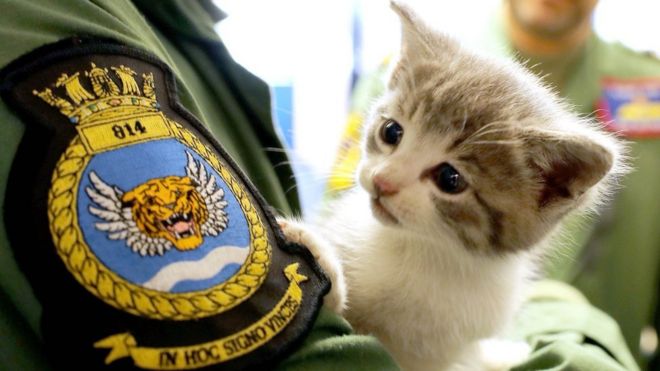
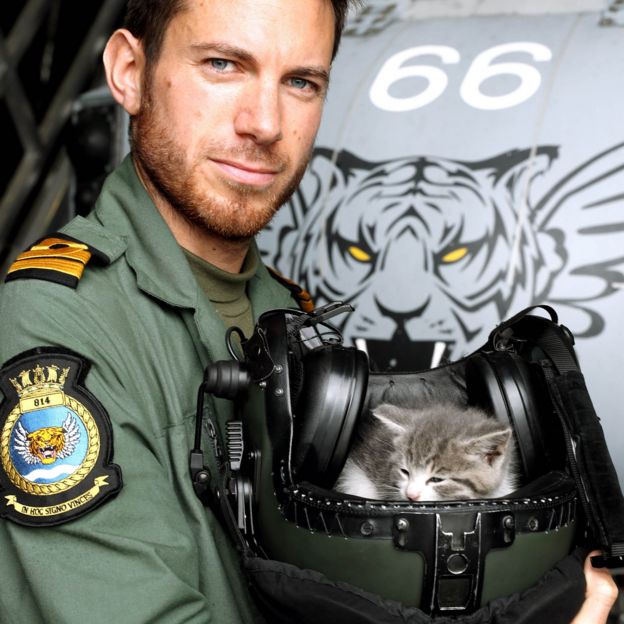
Kitten 'travels 300 miles' in Navy pilot's car bumper


TiggerImage copyrightPAUL A BARROW
Image caption'Tigger' in the arms of Lt Nick Grimmer

A kitten thought to have climbed inside a car bumper was discovered after a 300-mile journey. 
Royal Navy pilot Lt Nick Grimmer heard the kitten meowing a day after travelling from Birmingham to the Royal Naval Air Station in Culdrose.
He dismantled the car with colleagues and found the kitten hiding inside the bumper of his BMW.
The kitten has been named Tigger by the pilot's colleagues in the 814 Naval Air Squadron, known as the Flying Tigers.

Lt Nick Grimmer and TiggerImage copyrightPAUL A BARROW
Image captionThe kitten could become a mascot for 814 Naval Air Squadron
TiggerImage copyrightPAUL A BARROW
Image captionStaff at RNAS Culdrose are looking for Tigger's owners

Lt Grimmer, 32, said: "The place he has felt most comfortable is in my flying helmet, which is the only place he is able to sleep."
The pilot picked up his car at Birmingham Airport on Monday and drove to the air base via Bristol and Bath.
He thought it most likely the kitten had climbed inside the car while it was parked for several days at Birmingham Airport.
He said the kitten was unharmed by the journey and he and colleagues are now trying to find his owners.

TiggerImage copyrightPAUL A BARROW
Image captionTigger is being looked after by staff at the Royal Naval Air Station

Monday, 20 June 2016

Rise in fatal cat shootings leads to calls for airgun controls in UK

PETS


Most cats in the UK are free-ranging, coming and going into their owners' back gardens, and going on to visit neighbour's gardens as they please. They're not always popular: part of their normal behaviour involves digging up seedbeds to poop, and killing garden birds. As the Telegraph vet, I receive many questions from irate non-cat owners, asking how they can keep cats out of their gardens. I always suggest talking to the cats' owners, with options including “time sharing” gardens, and keeping cats indoors during prime bird-killing hours of dusk and dawn.
PETS
Many more cats are killed in air gun attacks today than 20 years ago CREDIT: ALAMY

Cats are often unpopular in their local neighbourhood

Sadly, some non-cat owners have little empathy for cats, and even though it's illegal, the killing of cats by members of the public is not uncommon.
Leading feline welfare charity Cats Protection have just released a survey of 1000 vets which shows that many more cats are killed in air gun attacks than 20 years ago.  Almost half of the vets questioned (44 per cent) had treated cats which had been the victim of attacks by air-powered weapons in the last year, with nearly half of these shootings proving fatal (46 per cent).  The high percentage of fatal attacks suggests that powerful air guns are being used. Injuries to the head and body are most common, with many cats left blind or partially sighted. The survey found that 88 per cent of air gun cat-shooters are aged 24 or under.
A moral hurdle is crossed when a living creature is used as a target, making it easier for perpetrators to cross the next moral hurdle of aiming the gun at a human

Cat-shooters may go on to become people-shooters

The findings are particularly worrying, given a leading criminologist has warned that some people who shoot cats could go on to commit similar crimes against humans. It's been said that a moral hurdle is crossed when a living creature is used as a target, making it easier for perpetrators to cross the next moral hurdle of aiming the gun at a human. There's also an argument that through the process of social learning theory (a theoretical framework in which criminal behaviour is learned), some offenders gain positive stimuli from engaging in animal cruelty which may lead to aggression towards humans – this is known as the “graduation hypothesis”.

Airguns should be licensed in England and Wales

In response to the survey findings, Cats Protection are calling for governments in England and Wales to make it a criminal offence to own an air gun without a licence or permit, following the example of Scotland, where this will be introduced in 2017.
Cats Protection is keen to gather more information on this topic. Any cat owners who have lost their cat to an air gun attack in the last six months are asked to send their details to campaigns@cats.org.uk. This will help Cats Protection to collect more evidence about the scale of these attacks as they continue to raise the issue with politicians.